How urban greenery in the Upper Rhine Plain can survive in the long term – ensuring our cities remain worth living in. The project ZUKAMAS is researching which tree species remain healthy in the long term and which care concepts ensure an urban environment worth living in.
On hot summer days, many air conditioners in cities run at full speed. But the most effective cooling devices have been right on our doorstep all the time – tall, deeply rooted and with a dense leaf canopy. Urban trees: they provide shade and noticeably lower the temperature in their surroundings. They are not only natural cooling units, but have also always been places of encounter and respite: from the rural lime tree to the plane tree in ancient Athens. But urban greenery is under pressure. Heat, drought, disease and sealed land prevent trees and bushes from reaching their ecological potential and cause them to die.
Searching for clues in the Upper Rhine Plain
In Karlsruhe and Freiburg, the drought years of 2018 and 2019 made clear how vulnerable young plantings are: “For several years now, around 30 percent of newly planted young trees have been dying. These losses are not only ecologically painful, they are also expensive and high-maintenance, because each tree costs the city several thousand euros and must be planned carefully before it is allowed to take root,” says Dr. Somidh Saha, research group leader at the Institute for Technology Assessment and Systems Analysis (ITAS). These fi gures are more than just statistics: they represent missed investments, gaps in the urban landscape, and people who will have to do without the green cityscape, shades and coolness of trees in the future. In the project “Future-oriented climate change management for urban green spaces (ZUKAMAS), KIT is conducting research together with other partners along the Upper Rhine Plain to determine which tree species, forms of care and planning tools will keep urban trees resilient despite climate change – so that they can continue to provide cooling, create meeting places and make our cities worth living in for future generations. The research area was deliberately chosen: the Upper Rhine Plain is one of the most heavily affected regions in Germany when it comes to heat and drought. “What we are testing here serves as a model for many other cities along the Rhine and Elbe,” says Saha.
How ZUKAMAS works
Cities are getting hotter in the summer: heat waves, sealed surfaces and stressed trees reduce quality of life and health. Without sufficiently sound urban greenery, there is a lack of shade, cooling and fresh air – rising temperatures have serious consequences for people and the environment. The project ZUKAMAS is researching which tree species remain healthy in the long term and which care concepts ensure an urban environment worth living in.
UT-UBGI (Urban Transformation towards Blue-Green Infrastructure)
Tested in Leipzig and other cities, this project explores how green and blue infrastructure – for example vegetation and water – can be better linked. The focus here is not only on cooling and climate, but also on the connection to social and planning processes. The goal: cities worth living, where green spaces and water areas work hand in hand. The project partners are ITAS-KIT, IIP-KIT, UFZ-Leipzig, and GERICS of Helmholtz Zentrum Hereon. The project is funded by the Helmholtz Association.
Project Manager Dr. Somidh Saha checks the condition of urban trees in Karlsruhe. The measurements are intended to help adapt care and irrigation specifically to climate change.
High tech meets root systems
A walk through the neighborhood is not enough to assess the health of the trees. Instead, high-tech equipment is used. Sensors measure water uptake, trunk growth and microclimate in real time. Dendroecological analyses provide insights into the reactions of different tree species to historical drought events. Molecular studies show how plant hormones respond to stress and how this affects resilience. At the same time, researchers are collecting data on the perception and acceptance of urban greenery. Which tree species are popular within the population? Where do people want more greenery? And how can new green neighborhoods be prevented from exacerbating social imbalances? “Our philosophy is to take a holistic view of the development of urban trees – from the lab bench to the street,” says project coordinator Saha, explaining the approach.
From record to urban planning
The data obtained is used to develop practical recommendations for cities and municipalities. In Karlsruhe and Freiburg, researchers are working closely with the horticultural authorities to test specifi c options for action during the project period – from targeted irrigation of young trees to recommendations for climate-resilient species. ZUKAMAS aims to provide specific recommendations: plant lists, maintenance plans, irrigation strategies and tools for city administrations for tree felling to be carried out less frequently, in a more targeted manner and for valid reasons. Instead of felling trees across the board – a common reaction because authorities need to protect themselves legally – data-driven assessments could also show whether a tree is actually in severe danger or can still be saved. This saves costs, conserves resources and preserves old trees that are valuable for the urban climate.
Among other things, teh project team records trukn growth, temperature and humidity directly on the tree in order to use the data to show how urban trees react to heat and drought.
Outlook: workshop, tools, impact
Ecologist Saha has a clear vision: “We should aim for at least 30 percent green space in the city.” Whether and how this can be achieved politically depends on resources, administrative capacities and the willingness to plan ahead – precisely where ZUKAMAS wants to provide tools. Over the next few months, the project will evaluate the data it has collected. Saha would also like to hold a final workshop with all relevant stakeholders to discuss findings and explore paths of implementation. Ultimately, it’s not just about planting trees in the short term, but integrating them into the urban infrastructure in the long term – and thus preserving the city’s green air conditioning system: for cooling, quality of life and health.
More than ZUKAMAS
URBORETUM
Records and digitizes the tree landscapes of Karlsruhe, Freiburg, Mannheim, and Heidelberg – including a “digital twin” of over 45,000 trees. Innovative sensors and acoustic tomography are used to detect damage inside the trunks without felling the trees. Growth, sap flow, fine root development and impact of irrigation on potential future tree species are being observed. The goal: more precise care, development of climate-adapted arboriculture, fewer unnecessary fellings and, in the long term, digital management of urban green spaces. URBORETUM is an Innovation Cluster led by KIT with involvement of University of Freiburg, Central Institute of Mental Health of Mannheim (affl iated to University Clinic of Heidelberg), City of Karlsruhe, digital twin company, greeHill Deutschland GmbH of Hannover, and Rinntech-Metriwerk GmbH & Co. KG of Heidelberg. The cluster is funded by the Federal Ministry of Research, Technology, and Space (BMFTR) under the program “Regional innovation groups for climate-friendly forestry andwood industry (REGULUS)”.
UT-UBGI (URBAN TRANSFORMATION TOWARDS BLUE-GREEN INFRASTRUCTURE)
Tested in Leipzig and other cities, this project explores how green and blue infrastructure – for example vegetation and water – can be better linked. The focus here is not only on cooling and climate, but also on the connection to social and planning processes. The goal: cities worth living, where green spaces and water areas work hand in hand. The project partners are ITAS-KIT, IIP-KIT, UFZ-Leipzig, and GERICS of Helmholtz Zentrum Hereon. The project is funded by the Helmholtz Association.
Project Manager Dr. Somidh Saha checks the condition of urban trees in Karlsruhe. The measurements are intended to help adapt care and irrigation specifically to climate change.
Among other things, teh project team records trukn growth, temperature and humidity directly on the tree in order to use the data to show how urban trees react to heat and drought.
Dr. Somidh Saha, Research group leader at the Institute for Technology Assessment and Systems Analysis (ITAS) at KIT.
Among other things, teh project team records trukn growth, temperature and humidity directly on the tree.
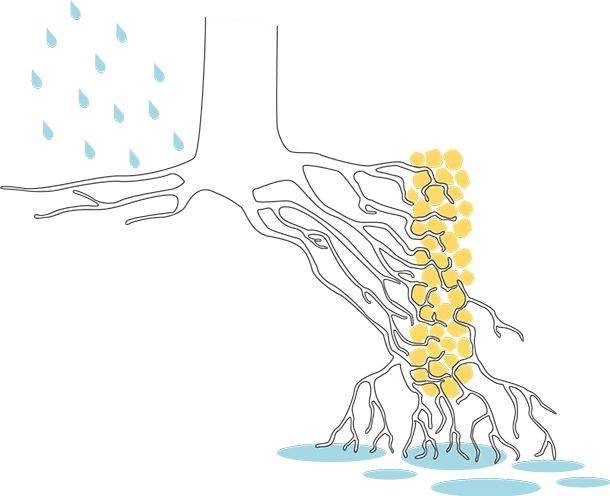
Sensitive measuring systems show how quickly trees absorb water after a period of rain in summer.
Using high-tech sensors and dendroecological analyses, researchers are recording how environmental stress manifests itself inside the tree.
Keyfacts:
GOAL
To make cities climate-resilient and worth living through smart tree planning using sensor technology, dendroecological analyses and public participation
APPLICATION
Data collection on tree health, climate effects and acceptance for informed recommendations on planting, maintenance and urban planning
PROJECT PARTNER
ITAS/KIT, IMK-IFU/KIT (Campus Alpin), JKIP/KIT, IMTEK/University of Freiburg, Chair of Forest Growth and Dendroecology and the Institute of Psychology at the University of Freiburg
Diese Seite nutzt Website-Tracking-Technologien von Dritten, um ihre Dienste anzubieten. Ich bin damit einverstanden und kann meine Einwilligung jederzeit mit Wirkung für die Zukunft widerrufen oder ändern.


![[Translate to Englisch:] A tree with a bandage and measurement tools.](/fileadmin/_processed_/1/7/csm_20251008-AB-01-009_da65c329c0.png)