- Climate, Environment & Health
- Production
WHAT BECAME OF "MINUS * MINUS = A PLUS FOR CLIMATE"
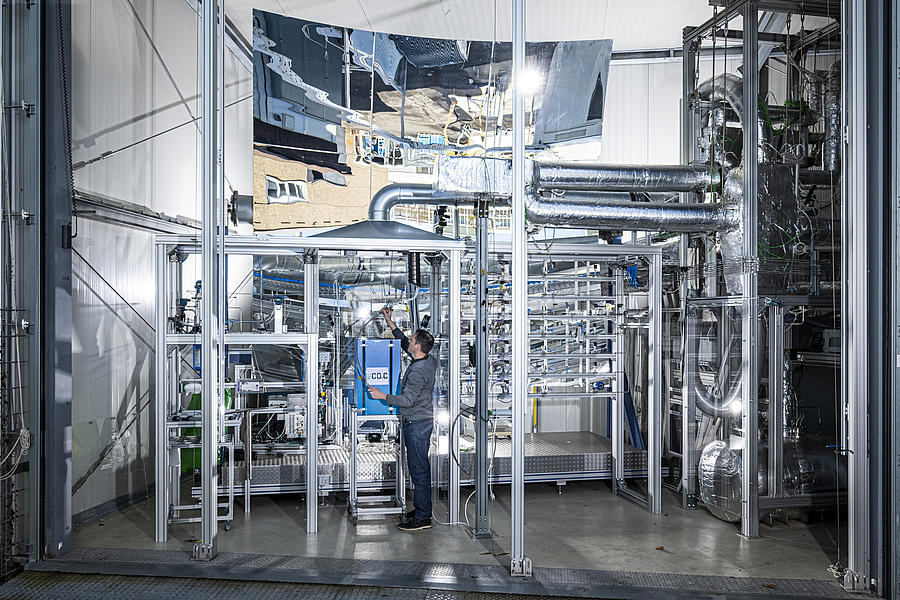
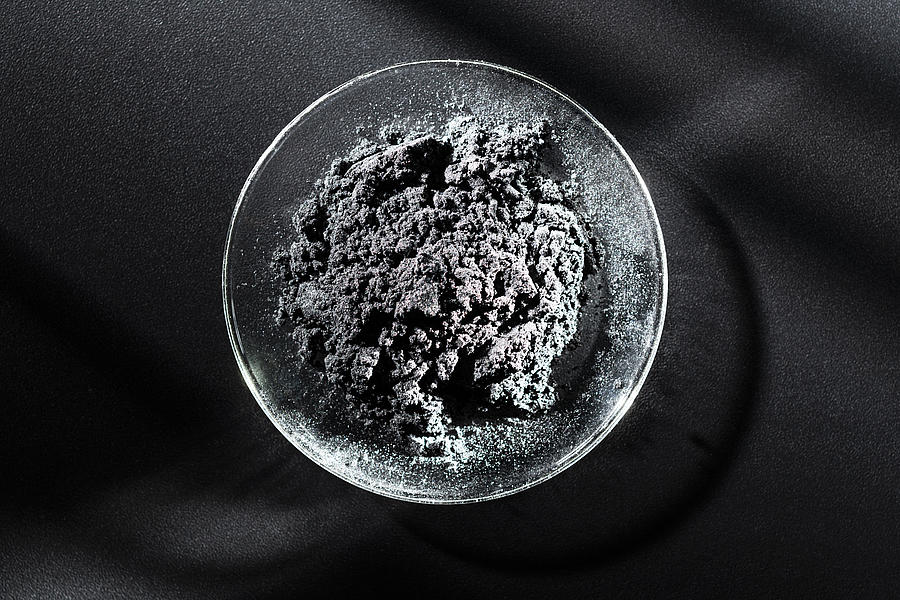
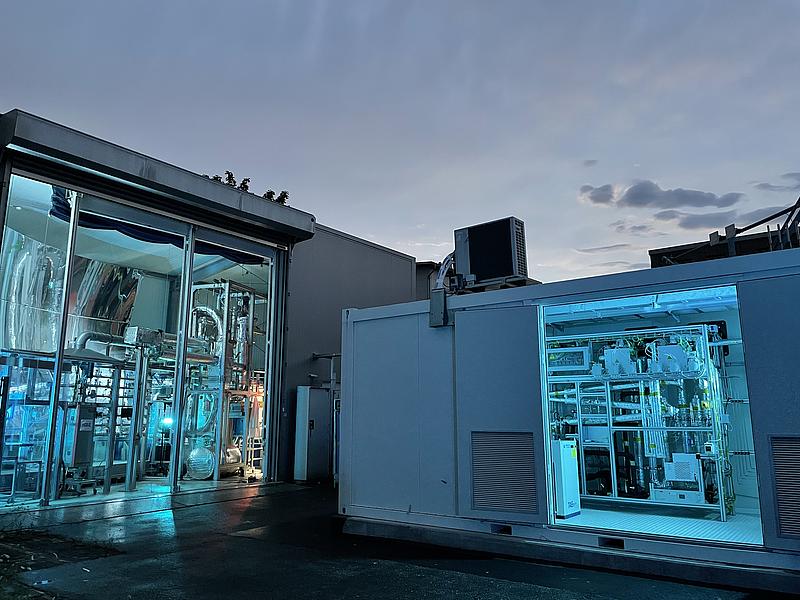
The principle behind NECOC is as simple as it is innovative. First, CO₂ is converted into methane using hydrogen generated from renewable sources. This methane is then broken down into its components - hydrogen and solid carbon - in a reactor filled with liquid tin. The hydrogen is recirculated back into the process, while the carbon is intended to be sustainably utilized as a valuable resource. For example, researchers are investigating its use in battery electrodes, construction materials, or as a coke substitute in the cast iron production process. This creates a closed carbon cycle. The approach is particularly interesting for industries where CO₂ emissions are technically difficult to avoid.
The further development of NECOC technology is gaining momentum in several research and technology transfer projects. In the CO₂DCC project, KIT is collaborating with Eisenwerk Brühl GmbH to convert CO₂ from the exhaust gases of a cupola furnace used for metal melting into solid carbon. This solid carbon is then to be reused in the melting process to replace fossil coke. In the NECOC-BW project, on the other hand, researchers are investigating the entire process chain - from CO₂ capture to pyrolysis - under various industrial conditions. To this end, they are analyzing, among other things, real-world exhaust gas data from the cast iron manufacturer FONDIUM Singen GmbH. A further step will follow starting in the fall of 2026: In collaboration with a waste management company, the application of NECOC technology is to be expanded to include thermal waste treatment. This will bring new areas of application for the use of CO₂ as a raw material into focus.
These projects demonstrate how a promising research idea can lead to concrete solutions for industrial transformation. They make it clear that CO₂ does not necessarily have to mark the end of a process, but can also serve as the starting point for new value creation.
Further Links:
Images:
- KIT